Role
CX/UX Analyst
(led taxonomy evaluation)
User
B2B buyers and procurement teams searching for technical products across different Wesco/Anixter brand sites
Tools
Optimal Workshop, Qualtrics, Google Analytics, Adobe Analytics, Excel, PowerPoint
As part of Wesco’s migration to Global Taxonomy V6, I led an initiative to evaluate and test a new customer-facing taxonomy to support scalable search, navigation, and product discovery. The work established the research and structural foundation for a global taxonomy intended to be applied across all subsidiaries. This was the organization’s first effort to design taxonomy around how customers actually search for and categorize products, replacing a legacy, paper-based structure that had never been optimized for digital experiences.
Challenges
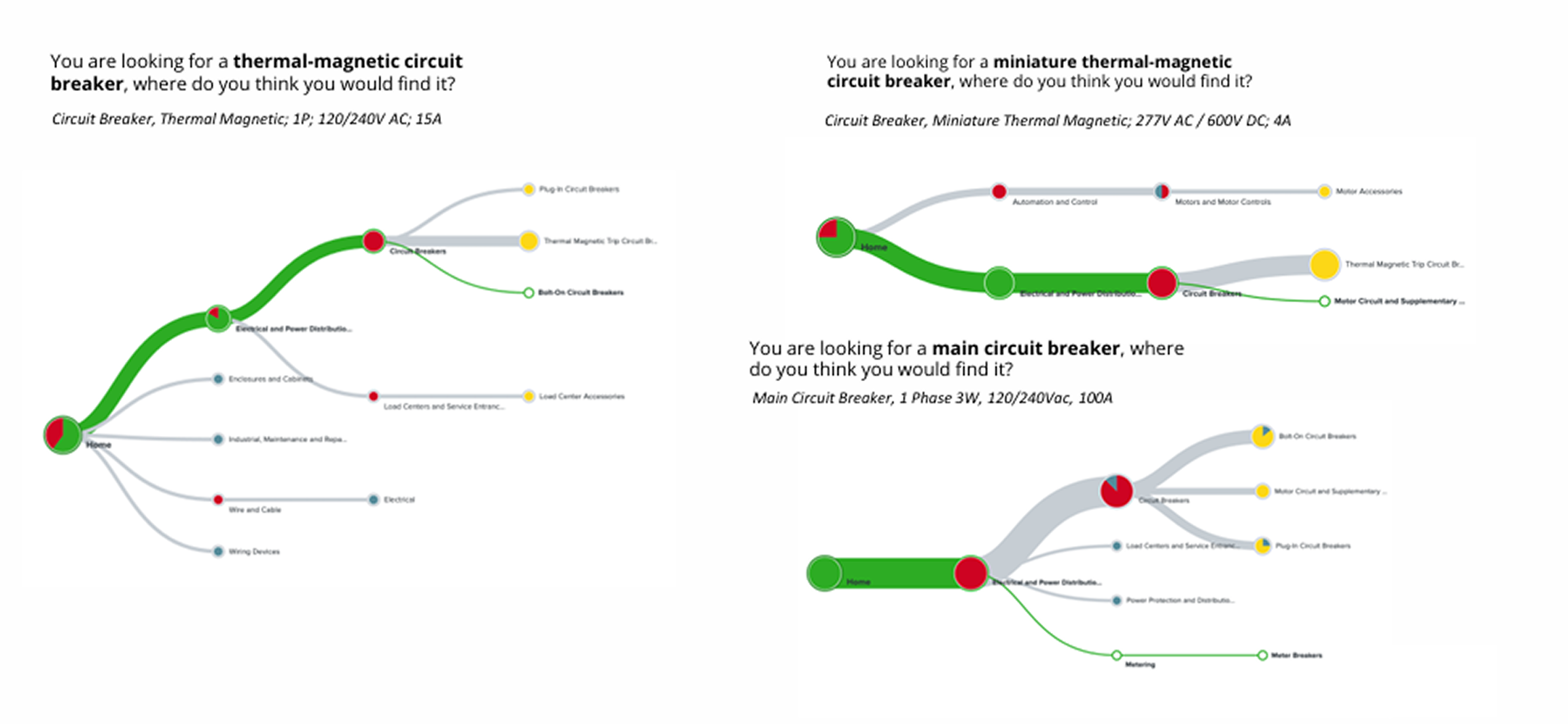
Standing up a customer-facing global taxonomy introduced several challenges. Each brand held its own assumptions about customer expectations and naming conventions, even when underlying products were largely similar. Research revealed significant gaps between how manufacturers labeled products, how internal teams organized them, and how customers expected to find them. In multiple studies, customers abandoned their search entirely when products did not appear within the first two or three categories they expected—making taxonomy a direct driver of findability and conversion. Because this was the company’s first taxonomy initiative grounded in customer research, the work required building shared understanding across teams while generating the insights needed to guide future implementation and change management.